About YRF
Yash Raj Films (YRF) has been a cornerstone of Bollywood since its inception in 1970 by the legendary filmmaker Yash Chopra. Starting with films like Daag and Kabhi Kabhie, YRF quickly became known for its emotionally rich storytelling and grand cinematic style. The studio revolutionized Bollywood romance with Dilwale Dulhania Le Jayenge (1995), which remains one of the longest-running films in Indian cinema. Under Aditya Chopra’s leadership, YRF expanded its horizons, delivering blockbuster hits across genres—from action-packed thrillers like Dhoom and War to heartwarming dramas like Veer-Zaara and Rab Ne Bana Di Jodi.
Top YRF Dialogues
Dilwale Dulhania Le Jayenge (1995)
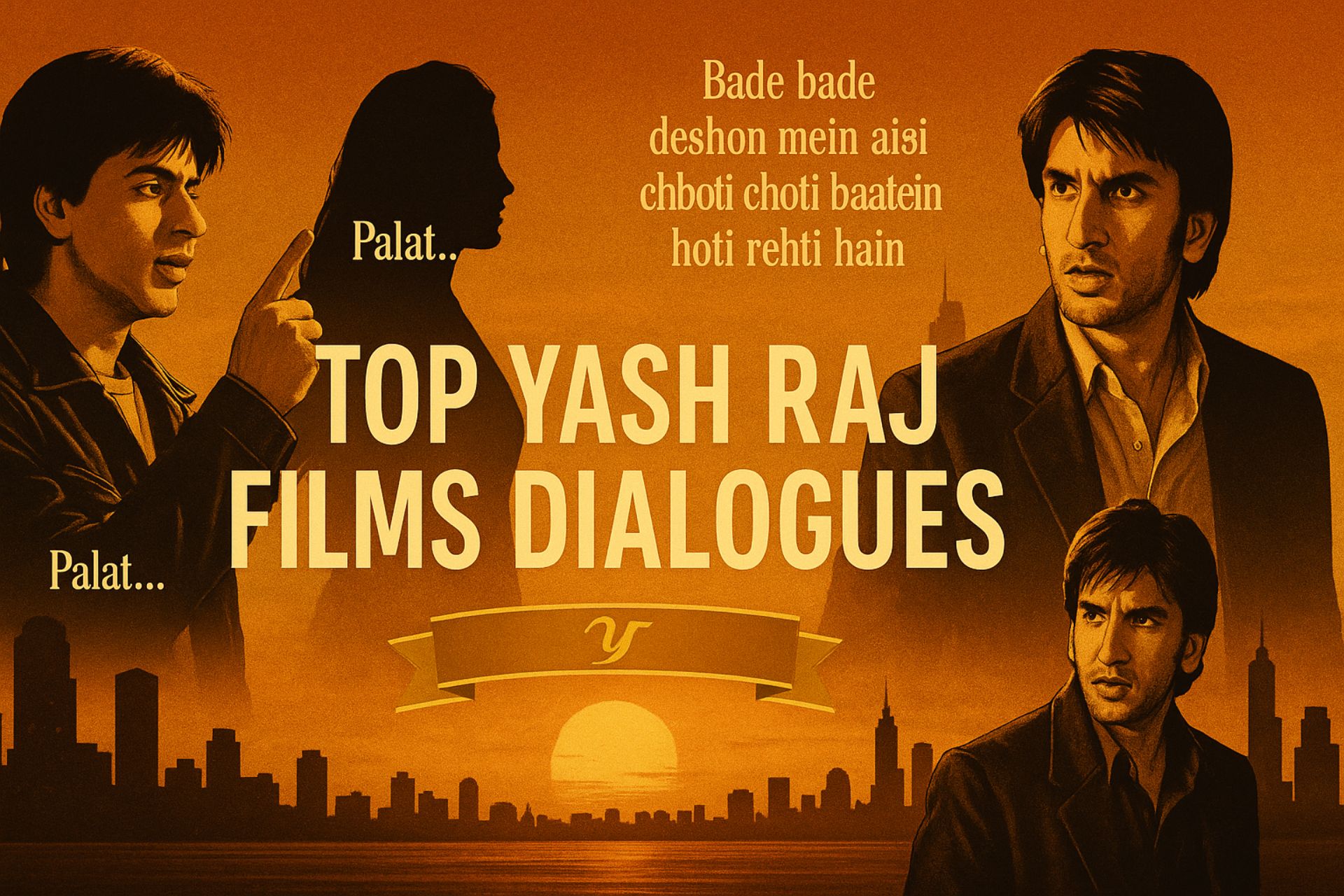
“Bade bade deshon mein aisi chhoti chhoti baatein hoti rehti hain, Senorita.” – Raj (Shah Rukh Khan)
The ultimate SRK charm in one line!
The climax of the film, when Simran’s strict father (Amrish Puri) finally lets go of his control and asks her to chase after Raj (Shah Rukh Khan), who is leaving on a train. It’s an emotional and triumphant moment of love winning against all odds.
Veer-Zaara (2004)
“Main ek Hindustani fauj ka sipahi hoon… aur ek fauj apne mulk ke liye sirf jang nahi ladti, kurbani bhi deti hai.”
Veer says this during a courtroom scene while defending his choices and sacrifices. It’s a moment of pride and pain as he justifies why he gave up everything—including his identity and freedom—for the woman he loves and for peace between India and Pakistan. The dialogue underlines themes of love, patriotism, and selflessness.
Chak De! India (2007)
“Sattar minute… sattar minute hai tumhare paas, shayad tumhari zindagi ke sabse khaas sattar minute!”
Kabir Khan (Shah Rukh Khan), the coach of the Indian women’s hockey team, gives this electrifying speech before the final match, motivating the players to give their best. It’s one of Bollywood’s greatest sports pep talks, filled with passion and intensity.
Kal Ho Na Ho (2003)
“Aaj ek hasi aur baant lo, aaj ek dua aur maang lo, aaj ek ansoo aur pee lo, aaj ek zindagi aur jee lo, aaj ek sapna aur dekh lo, aaj… kya pata, kal ho naa ho”
In one of the most moving scenes of the film, Aman (Shah Rukh Khan), who’s hiding his terminal illness, delivers this heartfelt monologue encouraging people to live life to the fullest—because tomorrow is never promised. The background music, visuals, and emotions make this one of Bollywood’s most iconic life-affirming moments.
Sultan (2016)
“Winners wohi hote hain jo baar baar girte hain, aur phir uthte hain.”
Sultan says this during his training comeback montage. He’s fallen from fame and is struggling physically and emotionally, but this line shows his resolve to rise again. It’s motivational and resonates with the underdog spirit of the film.
Om Shanti Om (2007)
“Ek chutki sindoor ki keemat tum kya jaano Ramesh babu?”
This dialogue is a dramatic recreation of a classic soap opera-style scene delivered by Shantipriya (Deepika Padukone) in a film within the film. It later becomes a hilarious, ironic callback in a revenge moment. The line is over-the-top by design, poking fun at melodrama while becoming iconic in its own right.
Rab Ne Bana Di Jodi (2008)
“Mujhe aap mein Rab dikhta hai.”
This line is spoken by Surinder Sahni (Shah Rukh Khan) during an emotional moment when he expresses his deep, unconditional love for his wife, Taani. For him, her presence is divine—and he truly sees God in her. It’s a quiet but powerful declaration of love, full of humility and reverence.
Jab Tak Hai Jaan (2012)
“Teri aankhon ki namkeen mastiyan… teri hasi ki beparwah gustakhiyan…”
This beautiful, poetic monologue is recited by Samar (Shah Rukh Khan) as he captures his feelings for Meera (Katrina Kaif) in his diary. It’s not just a love letter—it’s pure poetry, a lyrical tribute to the woman he’s hopelessly in love with. The scene is filled with longing, admiration, and poetic charm.
Mohabbatein (2000)
“Parampara, Pratishtha, Anushasan. Yeh is gurukul ke teen stambh hai. Yeh woh aadarsh hain jinse hum aapka aane waala kal banaate hain.”
Principal Narayan Shankar (Amitabh Bachchan) introduces new students to Gurukul with this strict, formal speech. He emphasizes that the school is built on three pillars: tradition, honor, and discipline. This line sets the tone for the film’s central conflict between rigid rules and the rebellious spirit of love brought in by Raj Aryan (Shah Rukh Khan).