When it comes to building a bond with audiences, few tools are as powerful as nostalgia. For millennials who grew up in the 90s, and even for Gen Z who’ve discovered that decade through remixes, playlists, and pop culture, 90s music sparks instant recall and cultural recognition that modern tracks can’t always replicate.
That’s why brands are increasingly turning to retro soundtracks in their campaigns. By reintroducing classics in a fresh way, they tap into familiarity, quirk, and cultural memory while staying relevant to today’s audiences.
Why 90s Music Works for Modern Advertising
1. Recall = Brand Stickiness
Hearing a familiar tune from the 90s activates memory centers in the brain. That immediate sense of recognition translates into stronger brand associations. When the music sticks, the campaign sticks.
2. Multi-Generational Appeal
For millennials, it’s a trip down memory lane. For Gen Z, it’s quirky and “new-old” cool. One track, two generations engaged.
3. Cultural Relevance
90s Bollywood music is deeply tied to India’s pop culture. Songs like Choli Ke Peechhe Kya Hai or Ek, Do, Teen don’t just feel familiar, they represent shared cultural moments. Using them instantly makes an ad feel relatable and rooted.
Case Studies:
The Whole Truth Foods – Protein Ke Peechhe Kya Hai
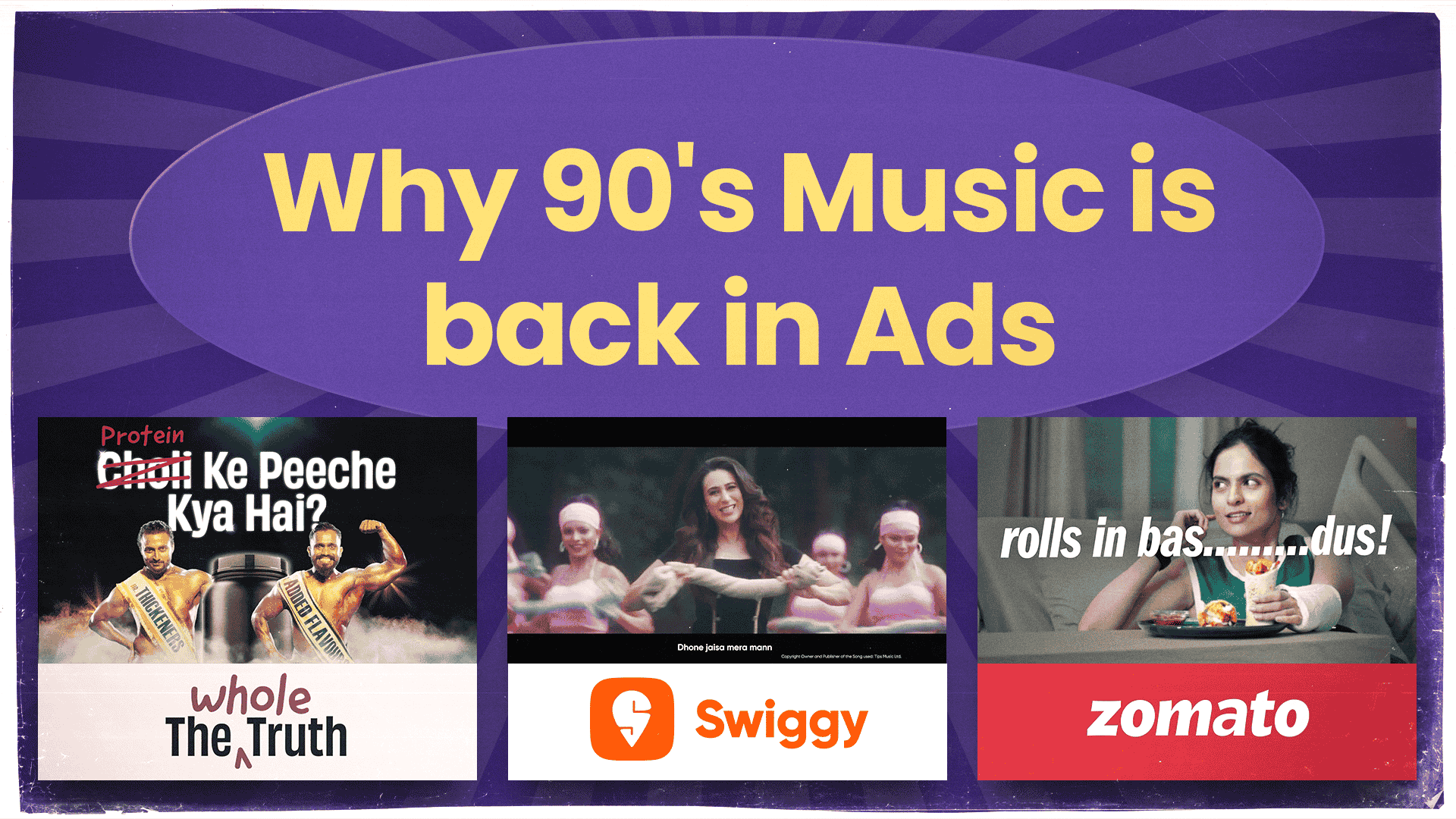
One of the most creative examples of this strategy is The Whole Truth Foods’ campaign, where they reimagined the 90s hit Choli Ke Peechhe Kya Hai.
- The Idea: The brand wanted to highlight its philosophy of transparency, what really goes into their products.
- The Execution: They cleverly flipped the original hook “Choli ke peeche kya hai” into “Protein ke peeche kya hai”. By syncing the iconic track with their messaging, they turned nostalgia into a bold, witty, and instantly memorable brand moment.
- The Impact: The campaign landed perfectly with millennials who instantly recognized the song, while Gen Z found the quirky remix entertaining and share-worthy.
Zomato: Remixing Ek, Do, Teen for Instant Recall
Zomato Quick created buzz by cleverly remixing the iconic Bollywood track “Ek, Do, Teen” (from the 1988 film Tezaab, still massively popular in the 90s and beyond). In their campaign, the familiar count “Ek, Do, Teen, Char…” — humorously stops at “Dus” to highlight their 10-minute delivery promise.
- This tapped into familiarity for older audiences while remaining playful enough for younger consumers.
- A simple tweak of a cult classic turned into a sharp brand message.
Swiggy Instamart: Dancing Back with Sona Kitna Sona Hai
Swiggy has a clearer example of using nostalgia in its campaign:
In its Diwali / Dhanteras campaign, Swiggy Instamart revived the iconic 1997 film Hero No.1 song “Sona Kitna Sona Hai” featuring Karisma Kapoor. They play off the original hook, then playfully replace “sona” (gold) with other words (e.g. “rona”, “dhona”) to tie into their festive offers.
The campaign copy explicitly references Karisma Kapoor dancing to that melody, making it a central nostalgic pivot. This is a solid example of a 90s Bollywood track being reused (or referenced) in a modern ad, both honoring the original and reworking it for today’s audiences.
Looking Back to Move Forward
The resurgence of 90s music in ads isn’t accidental, it’s a strategic move. Nostalgia builds cultural relevance, instant recall, and playful memorability, creating campaigns that stick long after audiences have seen them.
From The Whole Truth Foods’ bold “Protein ke peeche kya hai” to Zomato’s witty remix of Ek, Do, Teen and Swiggy’s festive revival of Sona Kitna Sona Hai, brands are showing that sometimes, the best way forward is to look back.
And if you’re a creator, agency, or brand looking to ride the same cultural wave with copyright-safe Bollywood and trending tracks, Hoopr Smash offers a growing library designed for modern storytelling and impactful brand campaigns.